Materials
HDPE vs LLDPE vs PVC: choosing the right geomembrane
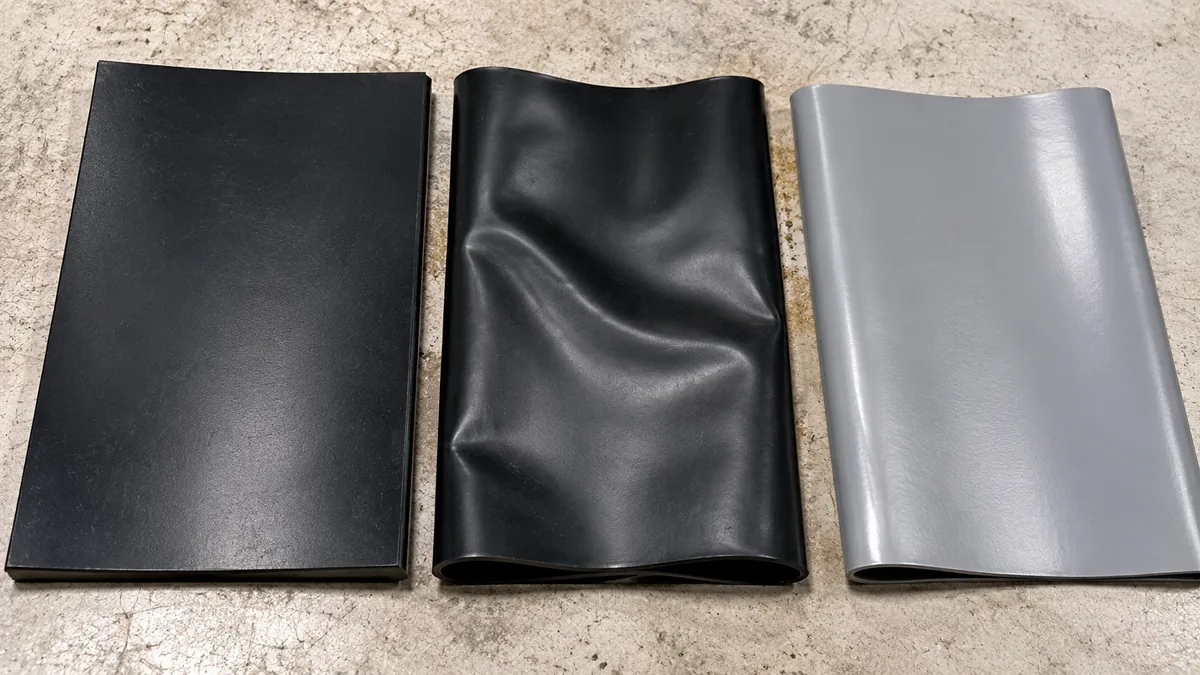
Three polymers, three very different personalities. Picking between them is not about which is best — it is about what the ground under your basin is…
Two quotations for the same basin can differ by half, and both can be for something described as “1.5 mm HDPE geomembrane”. Here is what actually varies, and what to ask before you commit.
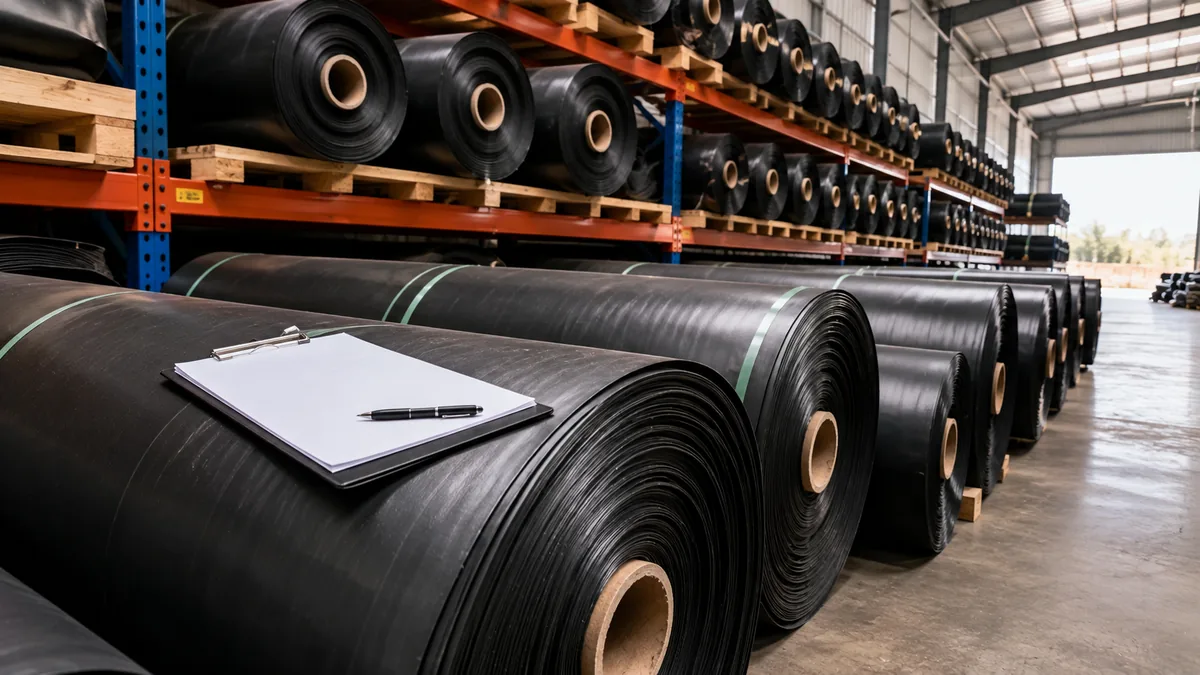
Geomembrane is one of those products where the invoice description tells you almost nothing. “HDPE liner, 1.5 mm, 7 m × 105 m” describes half a dozen materially different products with a price spread of 40 per cent or more between them. The differences are invisible on delivery day and expensive in year five.
Before comparing suppliers, be clear about what the job needs. Four inputs drive it: the depth of liquid, whether the liner is left exposed to the sun, how rough the prepared subgrade is, and what the basin will actually hold. A covered 1.0 mm liner over graded sand holding irrigation water is a different specification from an exposed 1.5 mm liner on gatch holding treated effluent, and pricing them against each other is meaningless.
If a consultant has issued a specification, buy to it. If nobody has, get the specification settled before you collect quotes — otherwise the cheapest quote wins by being for the least material, which is not the same as being the best value.
HDPE geomembrane is roughly 97 per cent polyethylene resin, 2–3 per cent carbon black, and a small but decisive fraction of antioxidants and stabilisers. Sheet made from virgin resin with a full additive package and sheet blended with reprocessed material look the same, weigh the same, and weld about the same. What differs is how long the sheet survives ultraviolet exposure and heat.
Carbon black is the UV screen. Its content matters and its dispersion matters more — pigment that has clumped rather than distributed leaves unprotected paths through the sheet, and the liner then fails in patches rather than uniformly. Antioxidants are consumed steadily over the liner's life; the standard measure of how much protection remains is oxidative induction time, and it is the closest thing this industry has to a shelf-life figure.
None of this is visible. All of it is on the mill certificate, which is why the certificate is the actual product you are buying.
Sheet sold as 1.5 mm should measure 1.5 mm, minus the small tolerance the standard allows. Sheet that measures 1.32 mm is 12 per cent less material, and the saving usually explains most of a suspiciously attractive price.
Two practical points. First, textured sheet is measured by core thickness, not over the asperities — a supplier quoting thickness measured over texture is quoting a different number. Second, thickness affects welding: a crew setting a wedge welder for nominal 1.5 mm sheet and running material that is materially thinner will produce over-welded, weakened seams. Check thickness on delivery with a gauge. It takes two minutes.
Ask for the mill test certificate for the actual roll batch, ideally before delivery. It should report, at minimum: density, core thickness, carbon black content and dispersion, tensile properties at yield and break, tear and puncture resistance, and oxidative induction time — tested against the ASTM methods that GRI-GM13 references. A certificate that reports only thickness and a roll number is not a conformance certificate.
Watch for a certificate that does not tie to your batch. A generic type-test report for the product line is evidence the mill can make good sheet; it is not evidence that your rolls are good sheet.
Decide this before you collect prices, because comparing a supply rate against an installed rate is the single most common cause of confusion in liner procurement.
Supply-only suits contractors with their own welding plant and trained operators. You take delivery, you deploy, you weld, you test, you own the result. Ask the supplier for a panel layout and rolls marked to match — it costs them little and saves you a day of head-scratching on site.
Supplied and installed puts sheet, welding, testing and documentation on one party. It costs more per square metre and it removes the argument about who is responsible if the basin leaks. On heavily specified work — landfill, effluent, anything with a regulator involved — this is usually the right call, because the QC file is part of the deliverable.
A full roll of 1.5 mm sheet weighs around a tonne. Before agreeing a delivery date, confirm that something on site can lift it, that it can lift it where the roll needs to go, and that the ground between the two will take the machine. Rolls are handled with a stinger bar or slings through the core — forks under the sheet crush the edge, and crushed edges become weld defects.
Once on site, keep rolls level, off sharp material, and covered if the programme has slipped. Sheet that spends four months in an unshaded stack before installation starts its working life with part of its protection already consumed.
A supplier who answers all six without hedging is a supplier worth dealing with. One who cannot produce a certificate, or who is vague about what a rate covers, is telling you something useful.
Check three things: the mill test certificate for your batch, the measured core thickness against nominal, and whether the sheet is virgin resin with a full carbon-black and antioxidant package. Everything else about liner quality follows from those.
Sometimes on paper, rarely by as much as it looks. Freight, duty, lead time and the risk of a batch arriving out of specification with nobody in the country accountable for it all have a cost. For stock gauges the difference is usually small enough that local supply wins on programme alone.
Gauge and texture, roll dimensions, total area, whether the area is sheet or basin, delivery terms, lead time, and the material standard the sheet conforms to. Installed quotes should add the welding scope, the testing regime and the documentation issued at handover.
Need this specified for a real project? We supply and install HDPE geomembrane sheet across the UAE — send the basin dimensions through the enquiry form and you will get a sheet take-off, a gauge recommendation and a price back.
Stock gauges 0.5–3.0 mm with mill certificates against every batch.
Hot-wedge and extrusion welding with every seam tested and logged.
Three polymers, three very different personalities. Picking between them is not about which is best — it is about what the ground under your basin is…
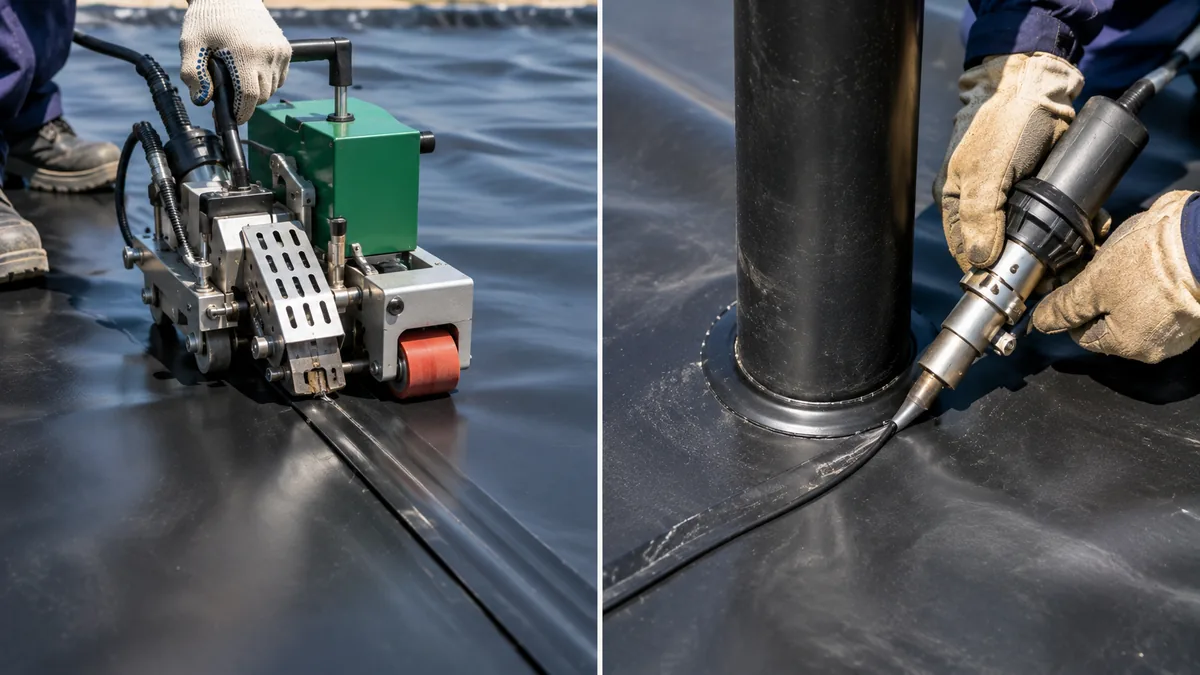
Sheet arrives from the mill consistent and certified. Seams are made on site, in the heat, by people. That is where lining projects succeed or fail.
Project enquiry
Send them through with the basin details. We will tell you where the differences actually are.