Environmental
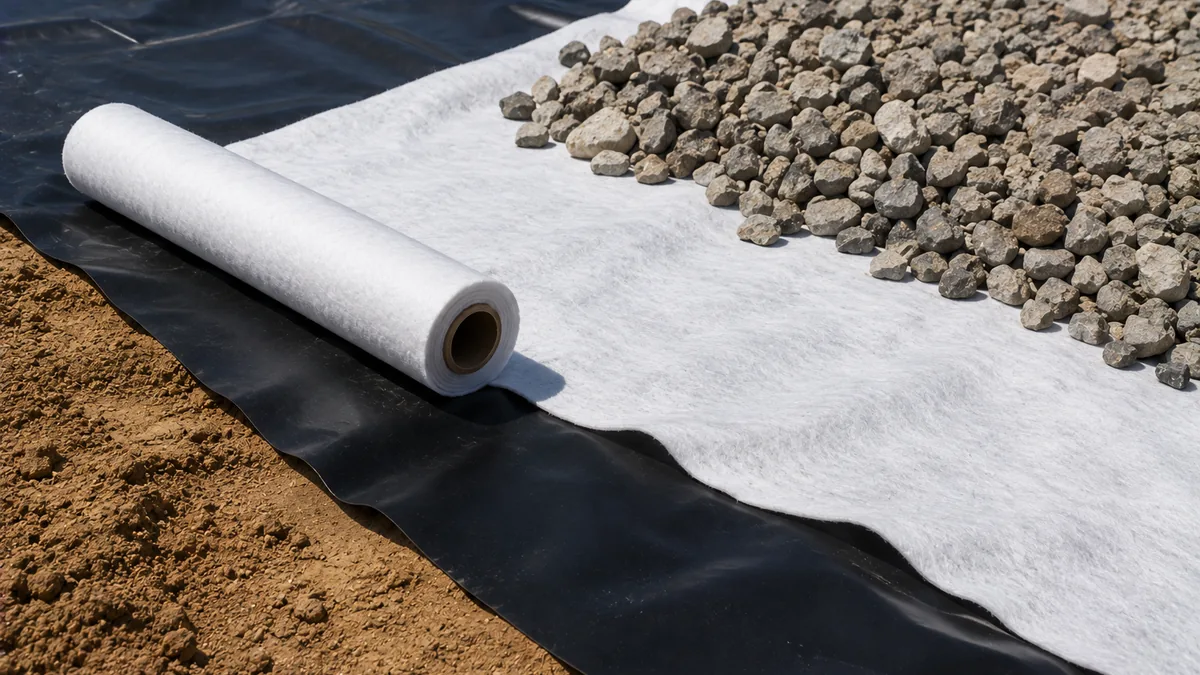
Landfill liner systems explained, layer by layer
A landfill liner is not a sheet. It is a sequence of layers, each doing one job, and the interfaces between them decide whether the slope stands up.
Seepage from an open channel is invisible. There is no leak to point at — just water that arrives at the far end in smaller quantity than it left.
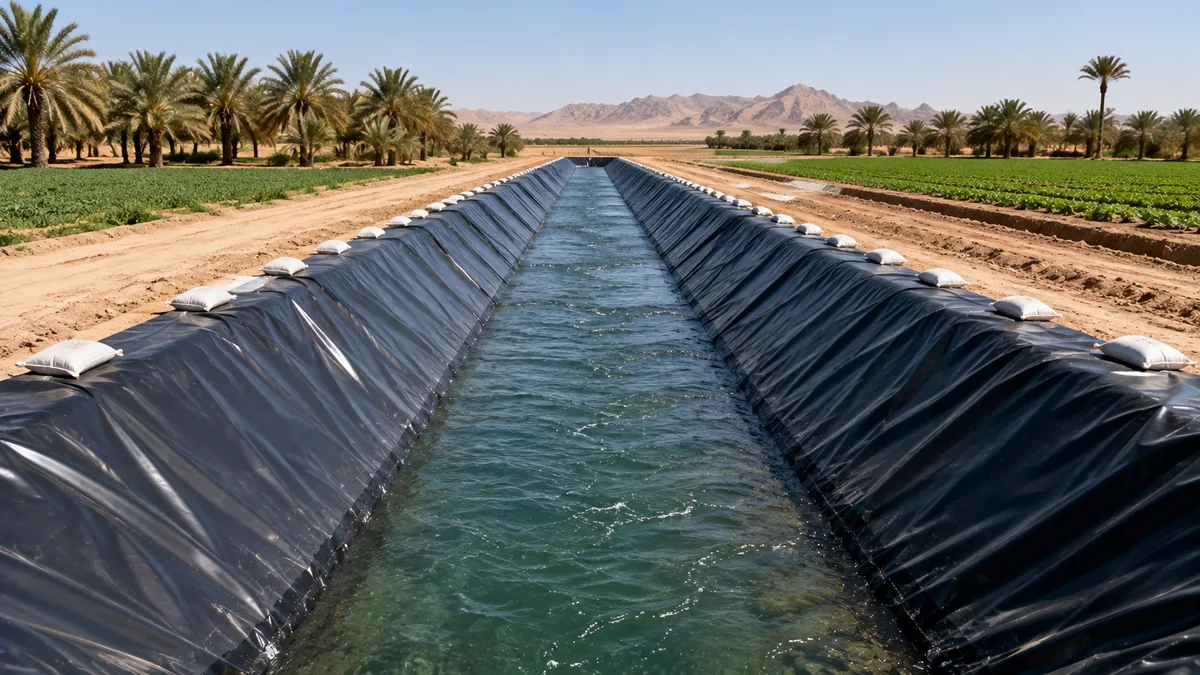
Conveyance losses in unlined earth channels are one of the largest and least visible inefficiencies in agricultural water use. Depending on soil, channel length and how long water sits in the section, a substantial share of what is pumped in never reaches the field. In sandy and gravelly ground — which describes most of the UAE — the share is at the high end.
Three mechanisms:
Because seepage is the largest and the most fixable, it is where lining money goes furthest.
| System | Seepage control | Durability | Notes |
|---|---|---|---|
| Compacted clay | Partial | Moderate | Cracks on drying, needs suitable local material |
| Concrete lining | Good when intact | Good | Cracks at joints and with settlement; leaks quietly |
| Exposed geomembrane | Excellent | Good | Fast, economical; needs protection from traffic and debris |
| Geomembrane under concrete | Excellent | Excellent | Highest cost; the barrier is the membrane, the concrete protects it |
The composite option is worth understanding properly. Concrete alone is not a reliable barrier — it cracks, and cracks conduct. Concrete over a geomembrane gives you a barrier that does not crack and a wearing surface that protects it. On any channel where lining life matters, that is the arrangement to specify.
A lined channel is at its most vulnerable when it is empty. If groundwater is high, or if rain has infiltrated behind the lining, the pressure beneath the membrane is no longer balanced by water above it — and the liner floats. Once a section lifts, it folds, and folds tear.
The fix is designed in, not retrofitted: relief vents through the membrane, or a drainage layer beneath it discharging to a low point. On any site with a seasonal water table, this belongs in the design from day one.
The calculation is simpler than it looks:
On long conveyance channels in permeable ground, the payback is frequently a small number of seasons. And unlike most agricultural investments, it keeps paying with no operating cost.
As a barrier, yes — concrete cracks and cracks leak. The strongest system is both: a geomembrane as the barrier with concrete over it as protection. Where budget only allows one, an exposed membrane usually controls seepage better than concrete alone.
The section being lined has to be dry, but channels are routinely lined in stages so supply continues elsewhere in the system. The shutdown windows drive the panel plan.
1.0 mm for smaller covered channels, 1.5 mm for exposed channels and anywhere with traffic, debris or a long design life. Slope angle and flow velocity influence the choice as much as thickness alone.
Need this specified for a real project? Channel and basin lining is what we do as HDPE geomembrane sheet suppliers in the UAE — send the basin dimensions through the enquiry form and you will get a sheet take-off, a gauge recommendation and a price back.
Irrigation channels, evaporation ponds and wastewater lagoons.
Storage at the end of the channel, lined to the same standard.
A landfill liner is not a sheet. It is a sequence of layers, each doing one job, and the interfaces between them decide whether the slope stands up.
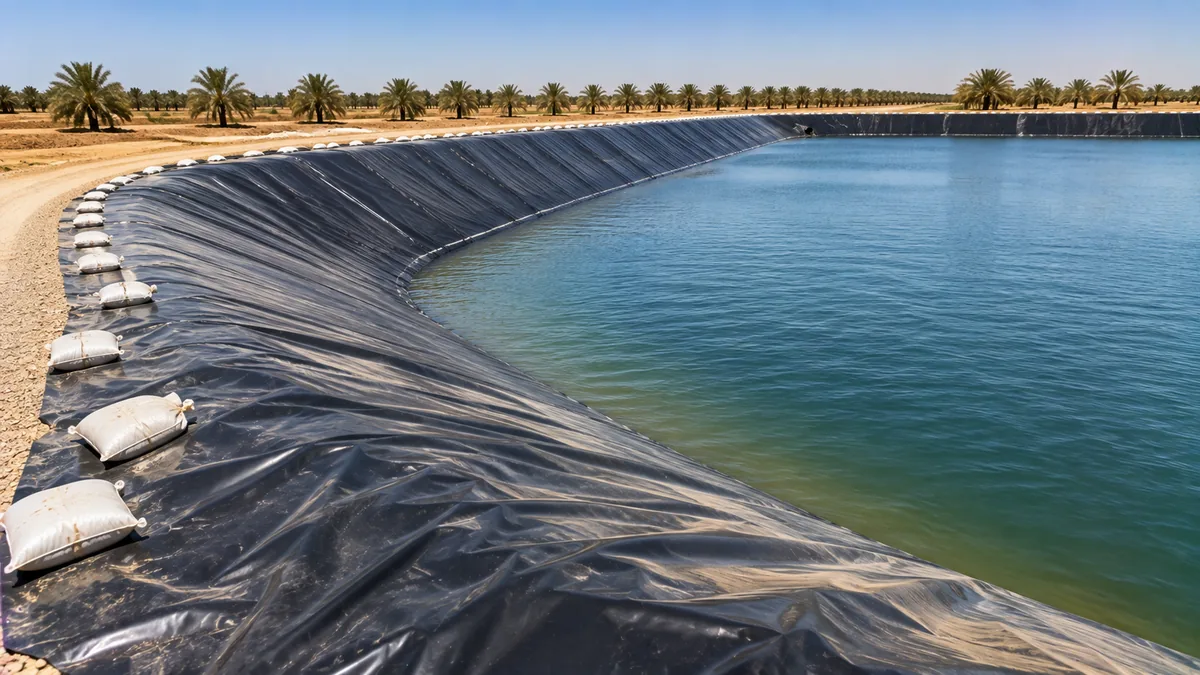
A farm reservoir on sand loses water two ways at once. Telling the two apart is the first step, because only one of them is fixed by lining.
Project enquiry
Send the channel length, section and the flows at each end. We will tell you what lining it would take.